
Mohenjo-daro: The Lost City of the Indus Valley Civilization
Introduction
Mohenjo-daro is one of the most important archaeological sites in the world. Located in Sindh, Pakistan, this ancient city is part of the great Indus Valley Civilization, which existed around 2500 BCE. Mohenjo-daro means “Mound of the Dead,” and it gives us a deep look into how people lived thousands of years ago. This historical place is not just a tourist attraction but a symbol of early human development, intelligence, and culture.
Discovery of Mohenjo-daro
Mohenjo-daro was discovered in 1922 by Indian archaeologist R. D. Banerji during the British colonial period. This discovery shocked historians because it revealed that an advanced civilization existed in South Asia long before many others.
Excavations showed well-planned streets, houses, and public buildings. This proved that the people of the Indus Valley Civilization were highly skilled in engineering and urban planning.
City Planning and Architecture
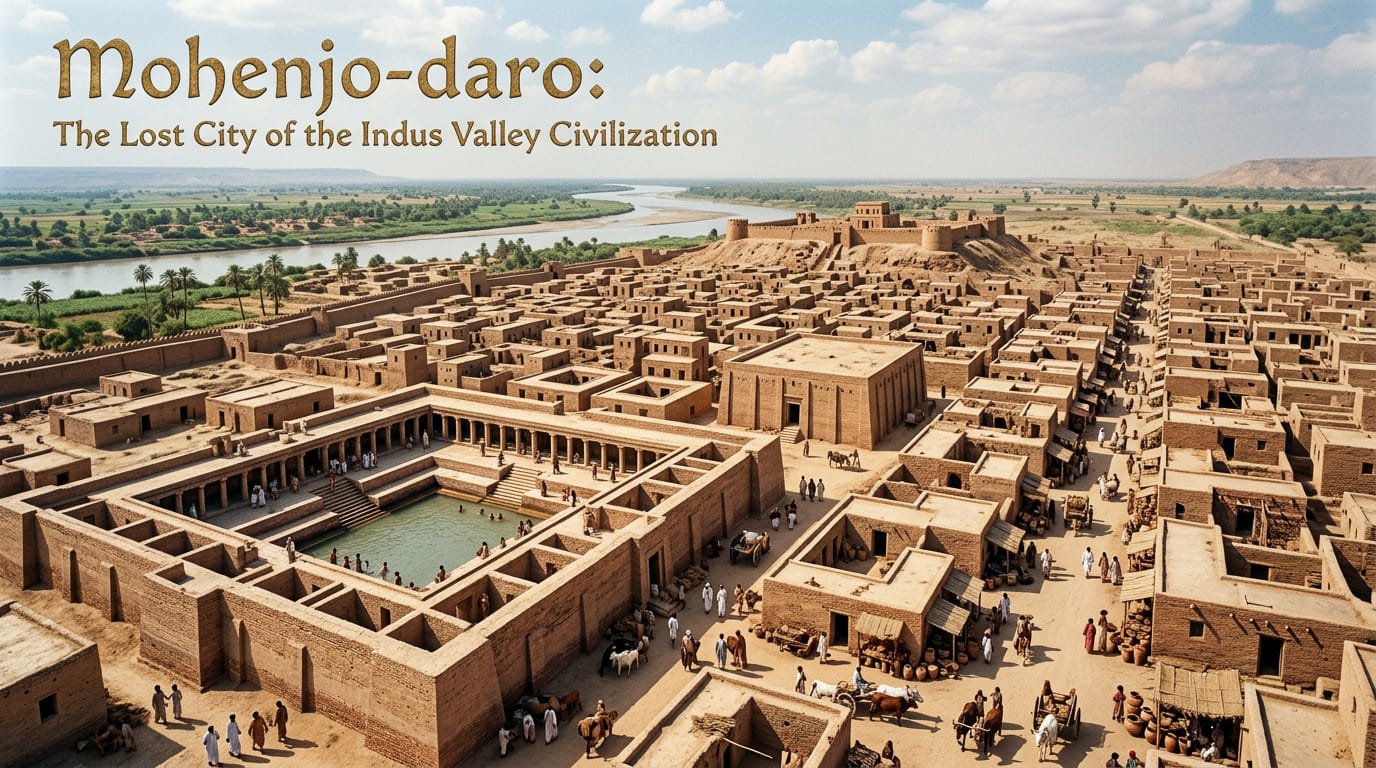
One of the most impressive features of Mohenjo-daro is its modern city planning. The city was built in a grid system, with straight roads crossing each other. Houses were made of baked bricks and had multiple rooms.
Each home had access to a drainage system, which is considered one of the earliest sanitation systems in the world. The presence of wells, bathrooms, and covered drains shows that cleanliness and hygiene were very important to the people.
The Great Bath
The Great Bath is one of the most famous structures in Mohenjo-daro. It is a large public water tank made of bricks and waterproof materials. Historians believe it was used for religious or ritual purposes.
The Great Bath shows the advanced construction skills of the people. Even today, its structure remains strong, proving the durability of ancient engineering techniques.
Daily Life in Mohenjo-daro
Life in Mohenjo-daro was well-organized and peaceful. People were involved in farming, trading, and crafting. They grew crops like wheat and barley and traded goods with nearby regions.
Artifacts such as jewelry, pottery, and tools have been found at the site. These items show that people had a sense of art, fashion, and creativity. Women and men both contributed to society, and there is evidence of equality in daily life.
Writing and Language
The people of Mohenjo-daro used a script known as the Indus script. However, this script has not been fully decoded yet. Symbols were found on seals, pottery, and tablets.
Because the language is still a mystery, many aspects of their culture and beliefs remain unknown. This makes Mohenjo-daro even more fascinating for historians and researchers.
Religion and Beliefs
Although there are no large temples found in Mohenjo-daro, small statues and seals suggest that people had religious beliefs. Some figures show a “Priest-King” and animals that may have had spiritual meanings.
Historians believe they may have worshipped nature, animals, or fertility gods. However, due to limited evidence, their exact religious practices are still unclear.
Decline of Mohenjo-daro
One of the biggest mysteries about Mohenjo-daro is its sudden decline. Around 1900 BCE, the city was abandoned.
There are several theories about why this happened:
Climate change and drought
Flooding from the Indus River
Earthquakes
Decline in trade
However, no single reason has been proven, and the fall of this great city remains a mystery.
Importance and UNESCO Status
Mohenjo-daro is recognized as a UNESCO World Heritage Site. It is one of the oldest urban settlements in human history. The site attracts historians, archaeologists, and tourists from around the world.
It helps us understand how early civilizations developed systems of governance, trade, and city life. It is a proud part of Pakistan’s cultural heritage.
Preservation Challenges
Today, Mohenjo-daro faces many threats, including weather damage, erosion, and poor maintenance. Efforts are being made by the government and international organizations to protect this valuable site.
Preserving Mohenjo-daro is important so future generations can learn about this incredible civilization.
Conclusion
Mohenjo-daro is more than just an ancient city—it is a window into the past. It shows us how intelligent and organized early humans were. From advanced drainage systems to planned streets, everything about this city reflects innovation and creativity.
Exploring Mohenjo-daro helps us understand our roots and appreciate the progress of human civilization. It remains one of the greatest historical treasures of Pakistan and the world.