
The Life and Leadership of Liaquat Ali Khan in Early Pakistan
Introduction
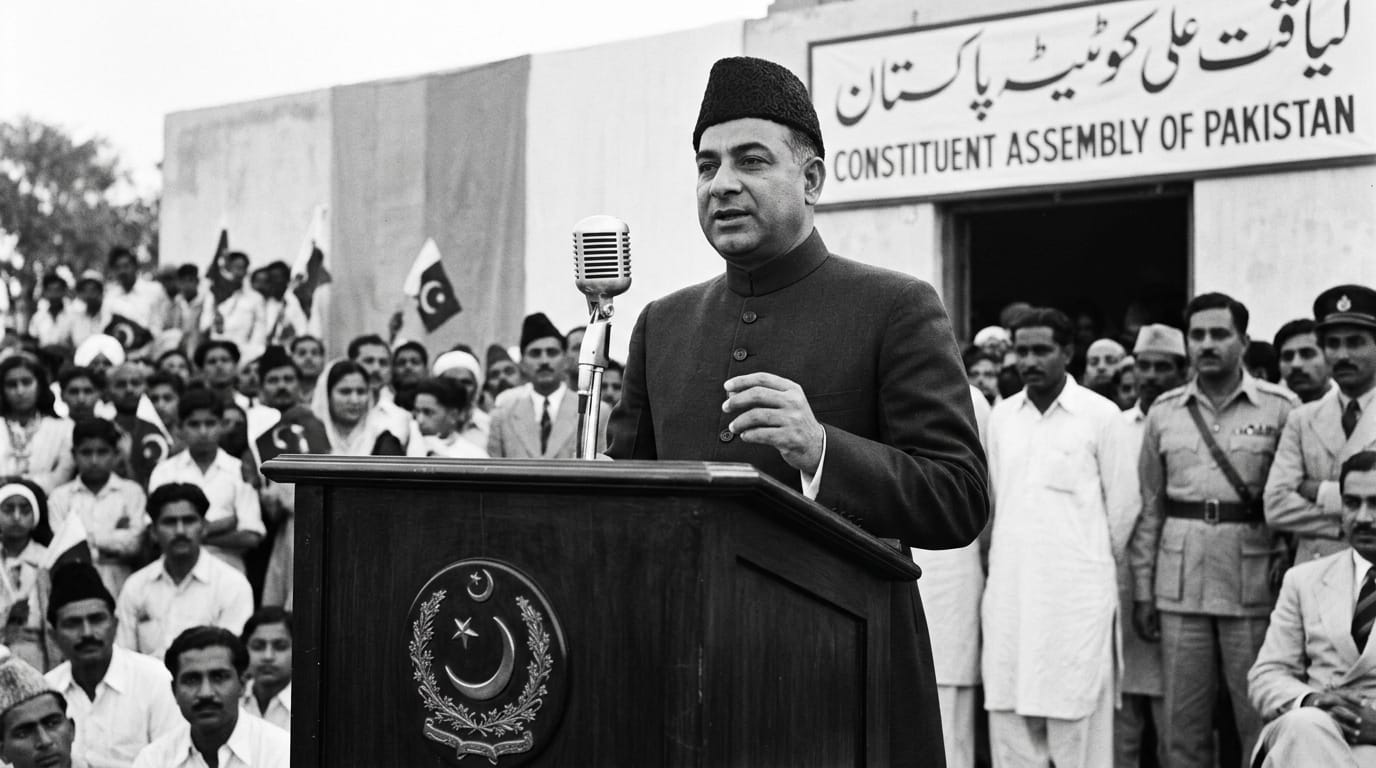
Liaquat Ali Khan was one of the most important leaders in the early history of Pakistan. As the country’s first Prime Minister, he played a vital role in shaping the political, economic, and administrative structure of the newly created state. His leadership during the difficult early years after independence helped Pakistan survive many challenges and set a strong foundation for the future.
Early Life and Education
Liaquat Ali Khan was born on October 1, 1895, in Karnal, British India. He belonged to a well-educated and wealthy family. From a young age, he showed great interest in education and leadership. He studied at Aligarh and later went to England, where he attended Oxford University. His exposure to Western education and political ideas helped shape his vision for a modern and independent Muslim state.
Political Career Before Independence
Liaquat Ali Khan began his political career by joining the All-India Muslim League, where he became a close associate of Muhammad Ali Jinnah. He was a loyal supporter of Jinnah and played a key role in organizing the Muslim League and promoting the idea of a separate homeland for Muslims.
He worked tirelessly to unite Muslims across British India and strengthen the political movement for Pakistan. His dedication and leadership made him one of the most trusted leaders of the Muslim League.
Role in the Creation of Pakistan
During the struggle for independence, Liaquat Ali Khan played an essential role in negotiations with the British government. He was actively involved in planning the future governance of Pakistan. His political skills and commitment were crucial in turning the dream of Pakistan into reality in 1947.
When Pakistan was created, he was appointed as the first Prime Minister, while Muhammad Ali Jinnah became the Governor-General.
Challenges After Independence
After independence, Pakistan faced many serious challenges. These included:
Migration of millions of refugees from India
Lack of financial resources
Weak administrative system
Tense relations with India
Liaquat Ali Khan had to manage all these problems at the same time. His leadership during this period was calm, practical, and determined. He worked hard to settle refugees, build government institutions, and maintain law and order.
Economic and Administrative Reforms
Liaquat Ali Khan introduced several important reforms to stabilize Pakistan’s economy. One of his major contributions was presenting the country’s first budget, which focused on economic stability and development.
He also worked on building a strong administrative system. Since Pakistan had very limited resources and infrastructure at the time, his efforts were crucial in setting up government departments and institutions.
Foreign Policy and Liaquat-Nehru Pact
In foreign policy, Liaquat Ali Khan aimed to establish Pakistan as a peaceful and independent country. One of his most significant achievements was the Liaquat-Nehru Pact (1950) with Indian Prime Minister Jawaharlal Nehru.
This agreement was important because it aimed to protect the rights of minorities in both countries and reduce tensions between Pakistan and India. It showed Liaquat Ali Khan’s commitment to peace and stability in the region.
Objectives Resolution
One of the most important contributions of Liaquat Ali Khan was the introduction of the Objectives Resolution in 1949. This resolution laid the foundation for Pakistan’s future constitution. It emphasized Islamic principles, democracy, and social justice.
The Objectives Resolution became a guiding document for Pakistan’s political system and remains important even today.
Assassination and Legacy
Tragically, Liaquat Ali Khan’s life was cut short when he was assassinated on October 16, 1951, in Rawalpindi. His death was a great loss for Pakistan, as the country lost a strong and capable leader at a critical time.
Despite his short time in office, his contributions left a lasting impact. He is remembered as a sincere, honest, and dedicated leader who worked tirelessly for the progress of Pakistan.
Conclusion
Liaquat Ali Khan played a crucial role in the early development of Pakistan. From supporting the independence movement to leading the country through its most difficult years, his leadership was essential in shaping the nation.
His efforts in governance, economic planning, and foreign policy helped establish Pakistan as a stable and independent state. Even today, he is remembered as a national hero whose vision and dedication continue to inspire future generations.