
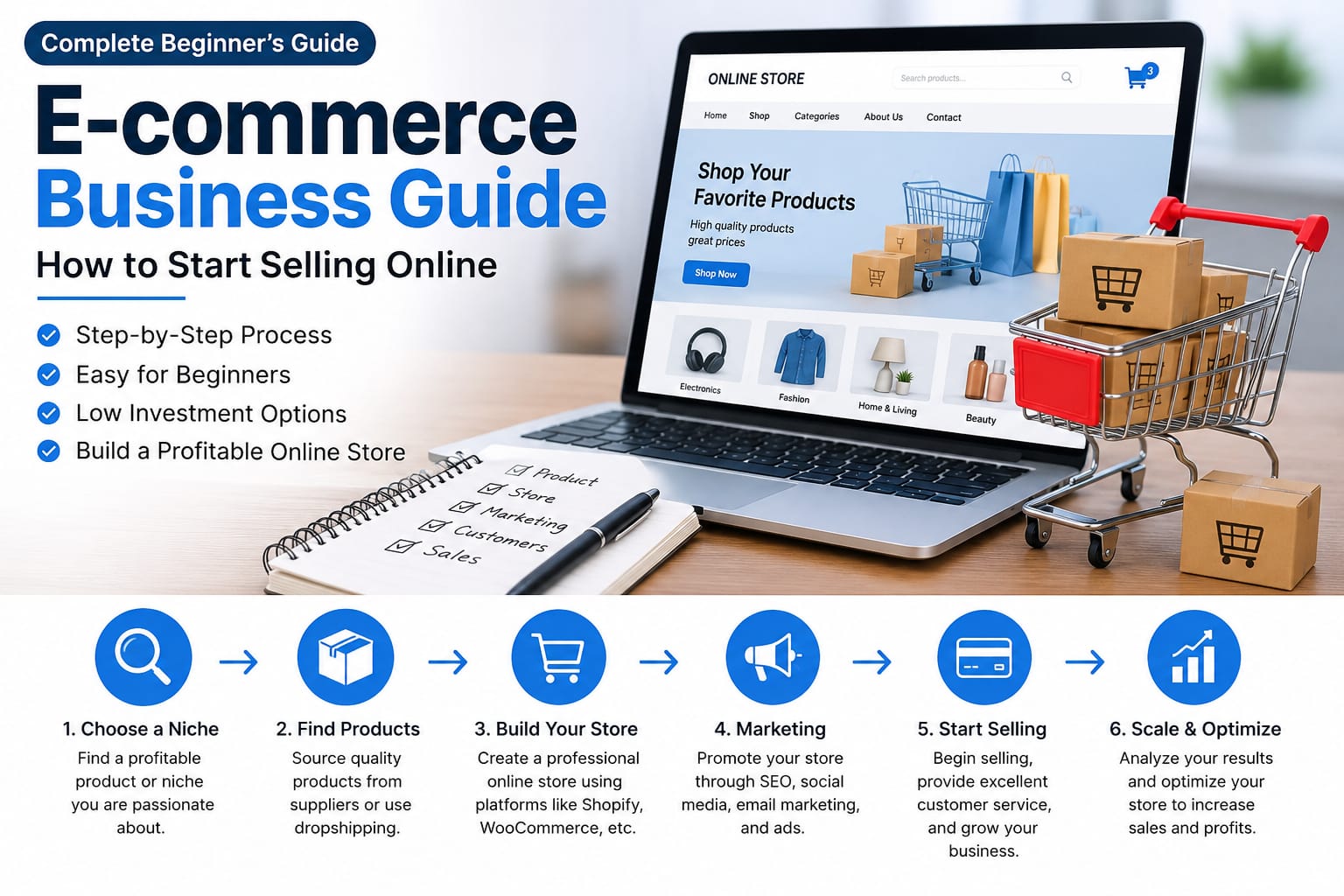
E-commerce Business Guide: How to Start Selling Online
Starting an e-commerce business has become an attractive option for entrepreneurs who want to sell products online and reach customers beyond their local area. From handmade products and clothing to electronics, beauty products, and digital goods, an online store can serve many different types of businesses.
However, creating an online store is only the beginning. Successful e-commerce businesses require careful product selection, customer research, reliable operations, effective marketing, and consistent improvement.
This e-commerce business guide explains how beginners can start selling online, choose products, build an online store, attract customers, manage orders, and develop a sustainable business.
What Is an E-commerce Business?
An e-commerce business sells products or services through the internet. Customers can discover products, place orders, make payments, and receive their purchases without visiting a traditional physical store.
E-commerce models can include:
– Business-to-consumer (B2C)
– Business-to-business (B2B)
– Consumer-to-consumer (C2C)
– Direct-to-consumer (D2C)
For beginners, a small B2C or D2C store can be a practical starting point because it allows entrepreneurs to focus on a specific group of customers and build a recognizable brand.
Step 1: Choose the Right Product
Product selection is one of the most important decisions in an online business. A product may look profitable, but that does not necessarily mean customers will buy it.
Start by identifying a specific customer problem or need. Research what people are searching for, what competitors are selling, and what customers say about existing products.
Consider products that are:
– Useful or solve a clear problem
– Reasonably easy to ship
– Suitable for your target market
– Profitable after all business expenses
– Different enough to stand out from competitors
Avoid choosing a product only because it is currently trending. Trends can disappear quickly, while products that solve ongoing problems may have more sustainable demand.
Step 2: Research Your Target Customers
Before building your store, understand who you want to sell to.
Ask questions such as:
– Who is most likely to purchase the product?
– What problem are they trying to solve?
– What price range can they afford?
– Where do they discover products online?
– What concerns might stop them from buying?
Creating a simple customer profile can make your marketing more focused.
For example, instead of targeting “everyone interested in fitness,” you could target beginners looking for affordable home workout equipment. A specific audience makes it easier to create relevant content and advertising.
Step 3: Study Your Competitors
Competitor research can reveal opportunities that you might otherwise miss.
Look at successful online stores in your chosen category and examine their product descriptions, prices, website design, customer reviews, shipping policies, social media presence, and content.
Do not simply copy what competitors are doing. Instead, identify gaps.
Perhaps customers complain about slow shipping, poor product information, complicated returns, or limited customer support. Your business could potentially compete by providing a better experience.
Step 4: Decide How You Will Source Products
There are several ways to obtain products for an e-commerce store.
You can manufacture products yourself, work with wholesalers, purchase from suppliers, create handmade items, or use a dropshipping model.
Each option has advantages and disadvantages.
Manufacturing can provide more control over quality and branding but may require more investment. Wholesale purchasing can offer better margins at larger volumes but requires inventory management. Dropshipping can reduce the need to hold inventory, but product quality, shipping times, and supplier reliability must be carefully considered.
Choose a model based on your budget, skills, product category, and long-term goals.
Step 5: Build Your Online Store
Your online store should be simple, trustworthy, and easy to navigate.
Important pages generally include:
– Home page
– Product pages
– About page
– Contact page
– Shipping information
– Return and refund policy
– Privacy policy
– Terms and conditions
Product pages should contain clear photographs, accurate descriptions, prices, available options, and useful information about the product.
Avoid writing exaggerated claims. Clear and honest product information can help customers make confident purchasing decisions.
Step 6: Choose a Payment Method
Customers need a convenient and secure way to pay for their orders.
Depending on your location and target market, available options may include debit or credit cards, bank transfers, digital wallets, and other recognized payment providers.
Before choosing a payment solution, compare transaction fees, supported currencies, security features, settlement times, and compatibility with your e-commerce platform.
Always make sure your payment process follows applicable laws and the requirements of your payment provider.
Step 7: Plan Shipping and Order Fulfillment
Shipping is a major part of the customer experience.
Before launching your store, determine:
– Where products will be stored
– Who will package orders
– Which courier or delivery service will be used
– How shipping costs will be calculated
– How customers will track orders
Be transparent about delivery times. Promising unrealistic shipping speeds may create customer complaints and negative reviews.
For international e-commerce, also research customs requirements, taxes, duties, restricted products, and international shipping costs before accepting overseas orders.
Step 8: Create a Marketing Strategy
A great online store will not automatically attract customers. Marketing is essential for generating traffic and sales.
Search Engine Optimization
SEO can help your store appear in search engine results when people search for products or information related to your business.
Create useful product descriptions, category pages, buying guides, comparisons, FAQs, and educational articles around your products.
For example, a store selling travel backpacks could publish content such as “How to Choose the Best Backpack for International Travel.”
Social Media Marketing
Social platforms can help businesses demonstrate products, share educational content, answer questions, and build relationships with potential customers.
Instead of posting only promotional messages, mix product content with helpful tips, demonstrations, customer stories, and behind-the-scenes content.
Email Marketing
Email can help you stay connected with customers after they visit your website.
You can use email campaigns to share product updates, educational content, special offers, and reminders. Always follow applicable privacy and marketing laws when collecting and using customer information.
Step 9: Provide Excellent Customer Service
Customer service can make a significant difference in e-commerce.
Respond to questions clearly and professionally. Provide accurate information about products, shipping, returns, and refunds.
If a problem occurs, focus on finding a reasonable solution rather than ignoring the customer.
Satisfied customers may return in the future and recommend your business to others.
Step 10: Track Your Business Performance
Once your store is operating, regularly review your results.
Important metrics can include:
– Website traffic
– Conversion rate
– Average order value
– Customer acquisition cost
– Return rate
– Repeat purchase rate
– Revenue and profit
These numbers can help you understand what is working and where improvements are needed.
For example, if a product receives significant traffic but few purchases, the issue could be its price, product information, customer trust, checkout experience, or another factor.
Common E-commerce Mistakes to Avoi
Many beginners make avoidable mistakes when starting an online store.
One common mistake is launching too many products without understanding customer demand. Another is focusing heavily on website design while ignoring marketing and customer service.
Other problems include unclear shipping policies, poor-quality product images, unrealistic claims, slow customer support, and failing to calculate the complete cost of each sale.
Start small, learn from customer feedback, and improve your store gradually.
Final Thoughts
Starting an e-commerce business requires more than simply creating a website and uploading products. You need a clear target audience, useful products, reliable suppliers, transparent policies, effective marketing, and strong customer service.
The best approach for beginners is to start with a focused product category, understand the target customer, test demand, and build systems gradually.
With consistent research and improvement, an online store can become a valuable business channel and potentially grow into a long-term brand. The key is to focus not only on making sales, but also on creating a trustworthy and useful experience that gives customers a reason to return.