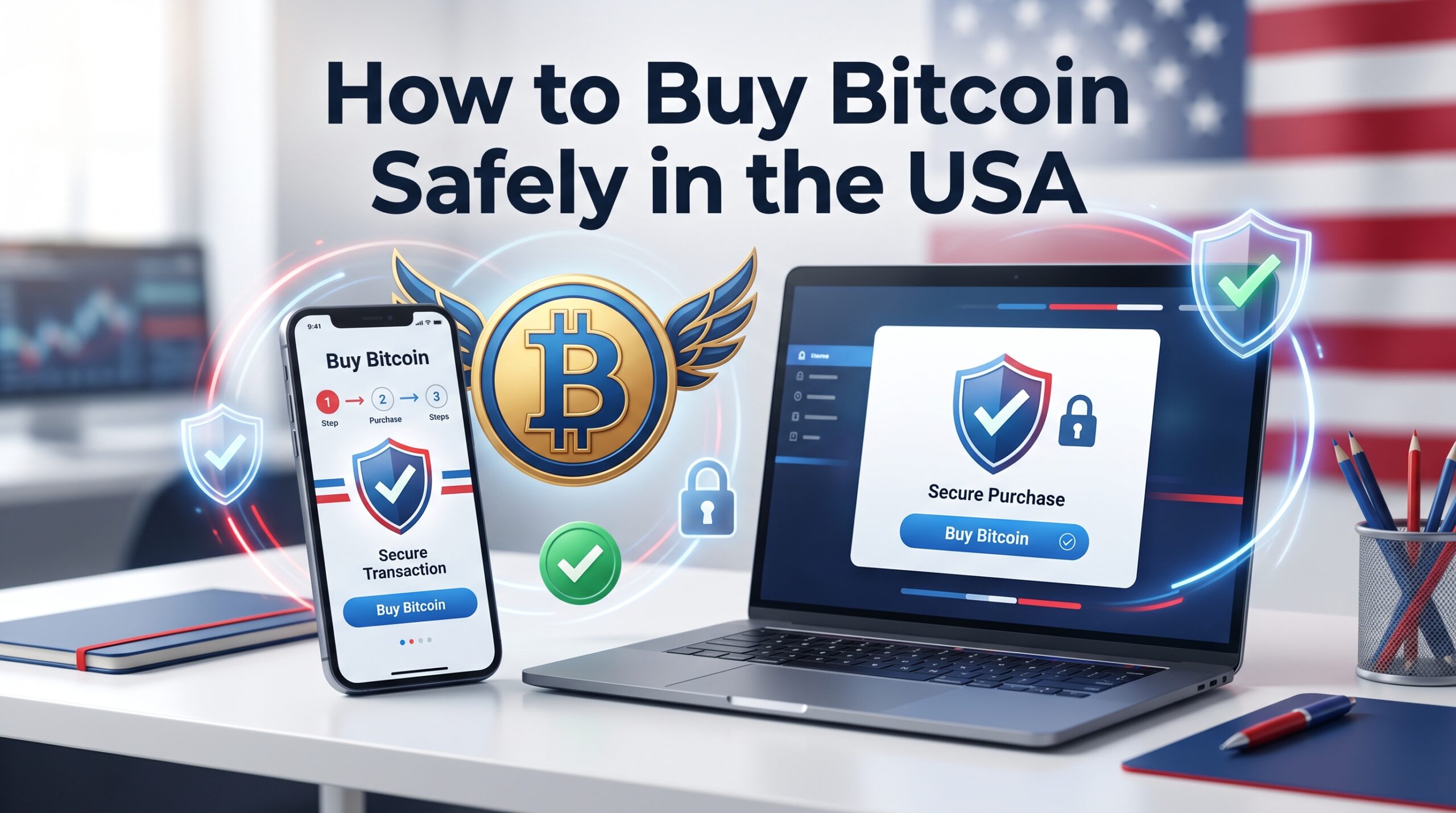
Buying Bitcoin for the first time can feel complicated, especially with unfamiliar terms like wallets, private keys, spreads, and network fees. The good news is that the basic process is fairly straightforward when you take it step by step.
The bigger issue is safety. Bitcoin transactions can be difficult or impossible to reverse, and scams often target beginners who are still learning how cryptocurrency works.
This guide explains how to buy Bitcoin safely in the USA, what costs to watch for, how custody works, and which common mistakes to avoid.
What Is Bitcoin and What Should Beginners Know?
Bitcoin is a digital asset recorded on a blockchain, a technology that keeps a shared record of transactions. You don’t need to buy one entire Bitcoin to get started. Most platforms allow users to purchase a fraction of a Bitcoin using U.S. dollars.
One important concept to understand is ownership and access. Bitcoin itself isn’t stored inside a wallet like cash is stored in a physical wallet. Instead, a wallet manages the cryptographic credentials that allow Bitcoin to be controlled and transferred. Private keys are particularly important because they authorize transactions.
Bitcoin’s price can also change significantly. The SEC describes Bitcoin-related exposure as highly speculative, so buying Bitcoin should not be treated as a guaranteed way to make money.
Another important point is that blockchain transactions generally cannot be reversed like a credit-card payment. If Bitcoin is sent to the wrong address, recovering it may not be possible.
For beginners, understanding these basics before making a purchase is just as important as choosing a platform.
How to Choose a Bitcoin Platform in the USA
The first practical step is choosing where to buy Bitcoin. Rather than selecting a platform because of an advertisement, celebrity promotion, or promise of high returns, look at its actual features and policies.
Before opening an account, check whether the platform:
- Serves customers in your state
- Supports Bitcoin purchases in U.S. dollars
- Clearly explains its fees
- Provides strong account-security options
- Allows Bitcoin withdrawals if you want to use a personal wallet
- Clearly explains how customer assets are held
- Provides accessible customer support
- Publishes current terms and withdrawal policies
U.S.-serving cryptocurrency platforms may require identity verification and other information as part of customer-identification and anti-money-laundering procedures.
It’s also important to understand that a cryptocurrency platform does not automatically provide the same protections as a bank account or traditional brokerage account. The type of asset, service, and custody arrangement matters.
Fees deserve particular attention. For example, Kraken’s official fee information shows that cryptocurrency transactions can involve trading fees, spreads, and payment or withdrawal-related costs.
So don’t judge a platform solely by an advertised trading fee. Look at the total cost of the transaction.
How to Buy Bitcoin Safely: Step by Step
Once you’ve selected a platform, the actual purchase process usually involves several straightforward steps.
1. Create and Verify Your Account
Create an account through the platform’s official website or application. Use accurate information and complete any required identity-verification process.
Avoid clicking account-creation links sent through unexpected texts, emails, or social-media messages. When possible, navigate to the platform directly or use a trusted bookmark.
2. Secure Your Account
Before depositing money, protect your account with a strong, unique password and multi-factor authentication.
An authenticator-based security method can provide stronger protection than relying only on SMS. The SEC also recommends using appropriate security measures to protect cryptocurrency accounts and wallet credentials.
Never give your password or one-time authentication code to someone claiming to be customer support.
3. Add a Payment Method
Depending on the platform and your location, you may be able to fund your account through a bank transfer, debit card, or another supported payment method.
Check the processing time and costs before choosing a funding method. Payment options and fees can vary between platforms.
4. Review the Price and Fees
Before confirming the purchase, look carefully at the transaction details.
You should be able to identify:
- How many U.S. dollars you’re spending
- How much Bitcoin you’re receiving
- The quoted Bitcoin price
- Any transaction or trading fee
- Any applicable spread
- Other applicable charges
The spread is essentially the difference between the price at which an asset can be bought or sold and a relevant market price. It can affect the actual amount you receive even when a platform advertises a particular trading fee.
5. Place Your Bitcoin Order
Enter the amount you want to purchase. Most platforms allow you to enter either a dollar amount or a Bitcoin amount.
You don’t need to purchase one whole Bitcoin. Buying a fractional amount is normal.
Take a moment to review the order before confirming it. Make sure the final amount and fees are what you expect.
6. Save Your Transaction Records
After completing the purchase, save the confirmation or receipt.
Keep records showing information such as:
- Purchase date
- Amount of Bitcoin purchased
- Dollar amount paid
- Fees
- Transaction details
These records can become useful later, particularly for tax reporting.
7. Decide Where to Keep Your Bitcoin
Buying Bitcoin and deciding how to store it are two separate decisions.
You can leave Bitcoin under the custody of the platform, or you can move it to a personal wallet.
If you choose to transfer Bitcoin to a personal wallet, carefully verify the destination address before sending anything. For a first transfer, some users may prefer sending a small test amount before moving a larger balance.
Understanding Bitcoin Fees
The price you see for Bitcoin isn’t necessarily the final amount you’ll pay.
Depending on the platform and transaction, costs can include a trading or purchase fee, a spread, payment-method charges, and withdrawal or network-related fees.
These costs aren’t universal. They can vary depending on the platform, payment method, order type, transaction size, and market conditions.
For example, Kraken’s published fee schedule describes different fees for different transaction types and notes that spreads can vary based on factors such as market volatility, order size, and other conditions.
Network fees are another concept beginners should understand. A blockchain network fee relates to processing a transaction on the Bitcoin network, while a cryptocurrency platform may separately charge a withdrawal or processing fee.
The safest habit is simple: look at the final amount before confirming a transaction rather than relying on a headline fee percentage.
Minimum purchase amounts also vary between platforms. Instead of relying on an outdated figure from a third-party website, check the platform’s current purchase screen and official fee documentation.
How to Store Bitcoin Safely
After purchasing Bitcoin, you’ll need to understand the difference between third-party custody and self-custody.
With third-party custody, a cryptocurrency platform or custodian controls the private keys associated with the Bitcoin. You access your holdings through your account with that provider.
With self-custody, you control the credentials that authorize transactions yourself. This gives you more direct control but also places greater responsibility on you.
Beginners may encounter two broad types of personal wallets:
- Hot wallets: Software wallets connected to the internet and generally convenient for accessing cryptocurrency.
- Cold wallets: Wallets designed to keep keys offline, which can reduce exposure to certain online threats.
Neither option removes every risk. A personal wallet can protect you from some risks associated with leaving assets on an exchange, but losing or exposing your recovery credentials can result in permanent loss of access.
Your seed phrase or recovery phrase should never be shared. Don’t give it to customer support, enter it into a website because someone instructed you to, or send it to another person.
Anyone who obtains the necessary recovery credentials may potentially gain control over the associated assets.
Bitcoin Scams and Mistakes to Avoid
Cryptocurrency scams often rely on urgency and impersonation.
Be especially cautious if someone contacts you unexpectedly and tells you to buy or send Bitcoin because:
- You’ve supposedly won a prize
- Your bank account has a problem
- You owe money to the government
- Your computer has been hacked
- You need to pay taxes immediately
- Your account needs to be “verified”
- You need to move funds to a “secure” wallet
- You’re promised guaranteed or unusually high returns
The FTC warns that government agencies do not demand cryptocurrency payments to resolve supposed problems. Unexpected requests to transfer cryptocurrency should be treated as a major warning sign.
Fake cryptocurrency support is another common risk. Someone may impersonate an exchange employee and ask for your password, authentication code, seed phrase, or remote access to your computer.
Legitimate support should never need your private key or recovery phrase.
Also be careful with Bitcoin ATMs, QR codes, social-media investment groups, dating-app contacts, and unsolicited messages directing you to send cryptocurrency.
Once Bitcoin is sent to a scammer’s address, recovering the money may be extremely difficult.
Basic U.S. Bitcoin Tax Considerations
There is also a tax side to buying and using Bitcoin in the United States.
The IRS generally treats digital assets such as Bitcoin as property for federal tax purposes. Selling, exchanging, or using Bitcoin to purchase goods or services can result in a taxable gain or loss.
Simply transferring Bitcoin between wallets or accounts that you own is generally different from selling or exchanging it. Still, keeping accurate records of your transactions is important.
Keep information such as your purchase date, purchase price, amount of Bitcoin, fees, sales, exchanges, and transfers.
For U.S. taxpayers, digital-asset reporting rules have also been changing. The IRS provides current guidance on Form 1099-DA and digital-asset reporting, so taxpayers should check the latest IRS information rather than relying on old cryptocurrency tax articles.
If your transactions are complicated, consider speaking with a qualified tax professional.
Final Safety Checklist
Before buying Bitcoin for the first time, make sure you can answer these questions:
- Am I using the platform’s official website or app?
- Do I understand the platform’s fees and spread?
- Have I enabled strong account security?
- Do I know how much Bitcoin I’m actually receiving?
- Do I understand who controls the private keys?
- If using self-custody, do I know how to protect my recovery phrase?
- Have I checked the wallet address before making a withdrawal?
- Am I ignoring anyone promising guaranteed returns?
- Am I keeping records of my transactions?
Buying Bitcoin safely isn’t about eliminating every risk. It’s about understanding the process, checking the details before sending money, protecting your account credentials, and avoiding situations that pressure you into making a rushed decision.
For beginners in the USA, taking a few extra minutes to verify the platform, fees, transaction details, and storage method can prevent mistakes that are much harder to fix later.